


Every three seconds someone is diagnosed with dementia. And more than 55 million people worldwide have dementia. Once thought to be a disease that ‘just happens’ we now know a lot more, including how lifestyle factors play a role. This is good news given there are no effective treatments to reverse dementia, so prevention is the key. Indeed, healthy living known to prevent type 2 diabetes, heart disease and certain cancers, can also prevent dementia.

What is dementia?
Dementia is used to describe a general decline in mental function such that it interferes with your daily life. This can be challenges in thinking and remembering things. Dementia itself isn’t one disease, but a group of conditions. Of these, Alzheimer’s disease is the most common accounting for 60%-70% of dementia cases.
The majority of dementias are progressive, meaning the disease and symptoms continue to get worse over time. Starting from what might be barely noticeable lapses in memory and needing more time to think, to more pronounced symptoms such as difficulty reasoning, communicating and changes in mood. It continues to progress to where regular daily activities are no longer possible without help. Ultimately, dementia can lead to early death and is a top five leading cause of death worldwide.
The chances of getting some form of dementia increases as we get older. Approximately 10% of people >65 years have dementia. This goes up to 35% in people over 90 years. And every five-year age increases, is associated with a doubling of chances for getting dementia. And women are more likely to get dementia than men, mostly due to having a longer life expectancy.

Food for Thought
You are what you eat, the saying goes. And similarly, your ability to think is affected by what you eat. The Mediterranean diet, which has been linked to preventing heart disease, may also be good for your mind. Following the Mediterranean diet is associated with improved cognition (the ability to process and understand) and reduced chances of getting dementia and Alzheimer’s disease.
More recently, the MIND diet has been developed to prevent dementia. Based off of the Mediterranean and the low sodium DASH diets, the MIND diet focuses on foods which may help to prevent dementia. These include olive oil, green leafy vegetables and berries high in flavonoids. Elderly adults who followed a MIND diet, or similar form of diet, cut their chances of dementia by half.
Other foods associated with less cognitive decline include fish (fatty fish such as salmon, sardines and herring) and nuts (walnuts) that are high in omega-3 fatty acids. But taking omega 3 supplements may not be the answer as they haven’t been found to affect cognitive decline. And ultra-processed foods may increase your chances for dementia. That being said, there’s no miracle foods to prevent dementia but a plant-based diet, with limited animal products and good fats, which avoids processed foods, seems to be consistently associated with better brain health.
Get Active and be Fit
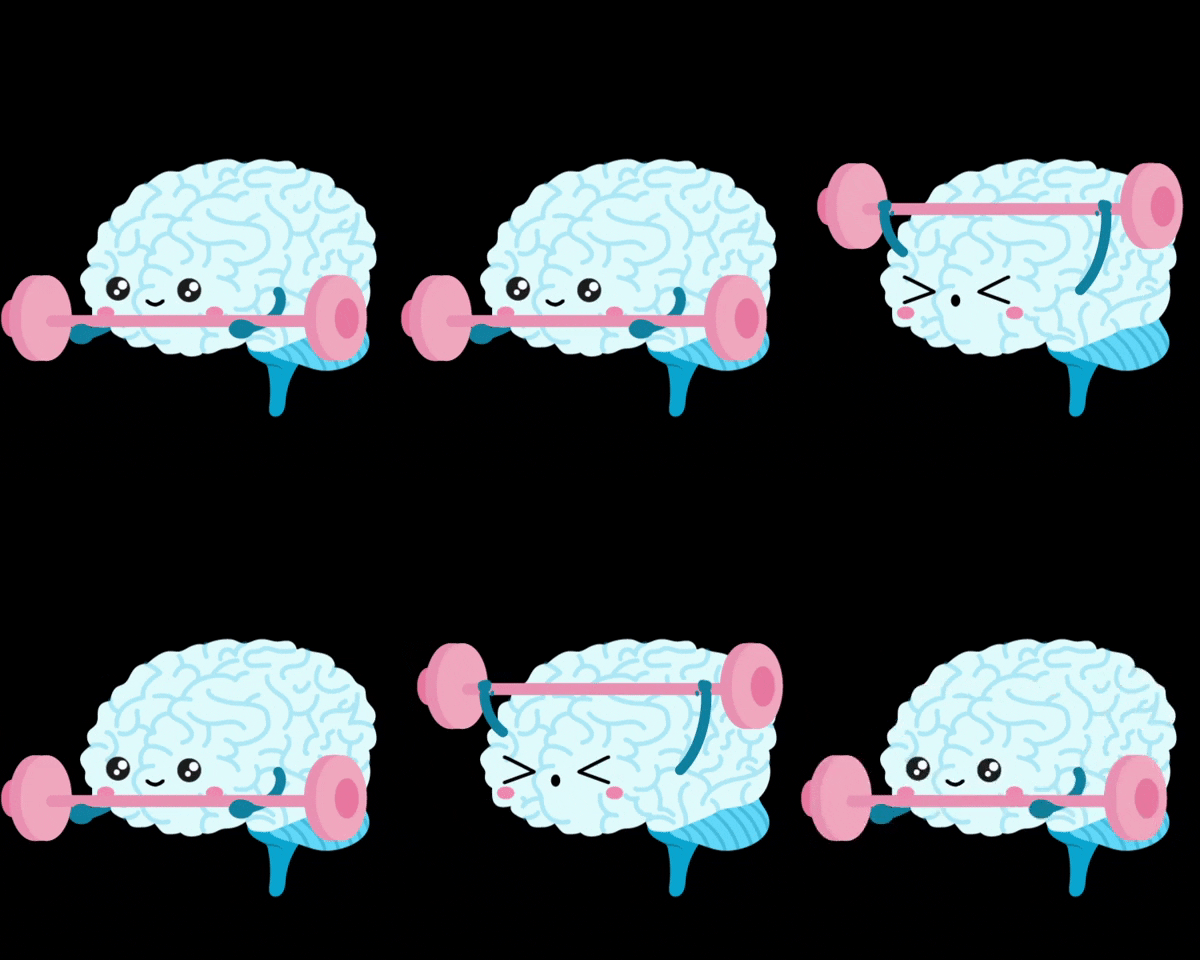
Exercise and being active has long been associated with feeling better. Whether it’s a walk or playing sports, just one session of exercise refreshes the mind and makes you more productive. Over the long-term, the benefits of regular exercise add up leading to improvements in memory and cognition. Given these findings, one would expect regular exercise to prevent dementia.
Whether exercise can prevent dementia by itself, isn’t quite clear. Some studies have not found any benefit from being active, while others have found activity to result in a small decrease in dementia. But studies that have measured activity using accelerometers have found that total activity and number of steps walked reduced the chances of getting dementia. For example, a daily step count of 3826 reduced chances by 25%, while 9826 reduced chances by 50%.
However, how physically fit you are may be more important than how much activity you do as people with higher fitness levels have less brain degeneration. Indeed, greater fitness levels are associated with a lower chance of getting dementia. And having a high level of fitness was enough to delay dementia by nearly 10 years compared to those who were unfit.
A Good Night’s Sleep
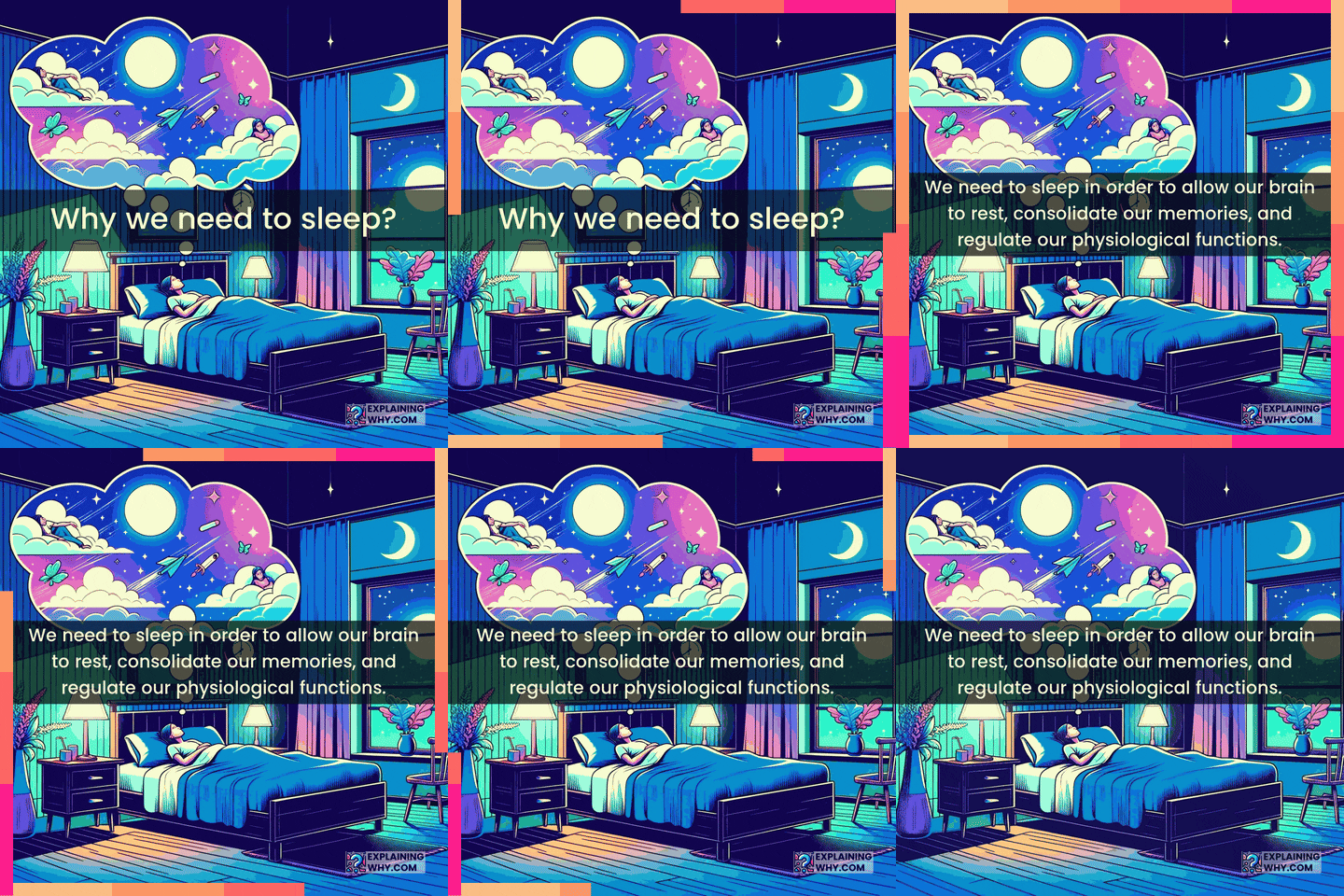
More than a third of adults don’t’ get the recommended 7-9 hours of sleep per night. And nearly half of adults report challenges getting sufficient sleep. Sleep is important as it allows both your body and brain to rest and recover (get sleeping tips here). During sleep your brain is still active as it is processing what happened during the day and getting rid of toxic substances that have accumulated.
You probably don’t need a study to tell you that a lack of sleep can affect how you think. When you’re tired, you’re not as sharp and your brain may feel like it’s in a fog. Over time, insufficient sleep can increase your chances of getting dementia. Decreases in slow wave sleep may be of particular concern. Slow wave sleep occurs early in your sleep and is when toxins that are associated with dementia are cleared from your brain.

Socialize
We humans are naturally social. And this has had numerous benefits for our survival over thousands of years. In contrast, being isolated and lonely can increase your chances for disease and early death, including dementia. This may be due to the association that social isolation has with risk factors (hypertension, diabetes, smoking) implicated in dementia.
People with stronger social connections in mid- and later-life, may be less likely to experience cognitive decline. Social connections can stimulate the release of “feel-good” hormones endorphins and oxytocin. Oxytocin has been found to be associated with improved cognition in mice. But you may not need to be face-to-face with people to be connected, as older adults who were able to connect with others by computer, phone or text had lower chances of social isolation.
So be mindful (pun intended) that as healthy eating, regular activity, good sleep and being social is keeping your mind sharp, they’re also keeping you healthy and preventing many other diseases as well.
If you like this post, don’t forget to subscribe to my blog at the bottom of the page.
This post was originally published on Jul 17, 2019 and updated on Jun 19, 2024.
Enjoy listening to podcasts? Check out my show How to Health. A podcast about you and your health.

Leave a Reply