

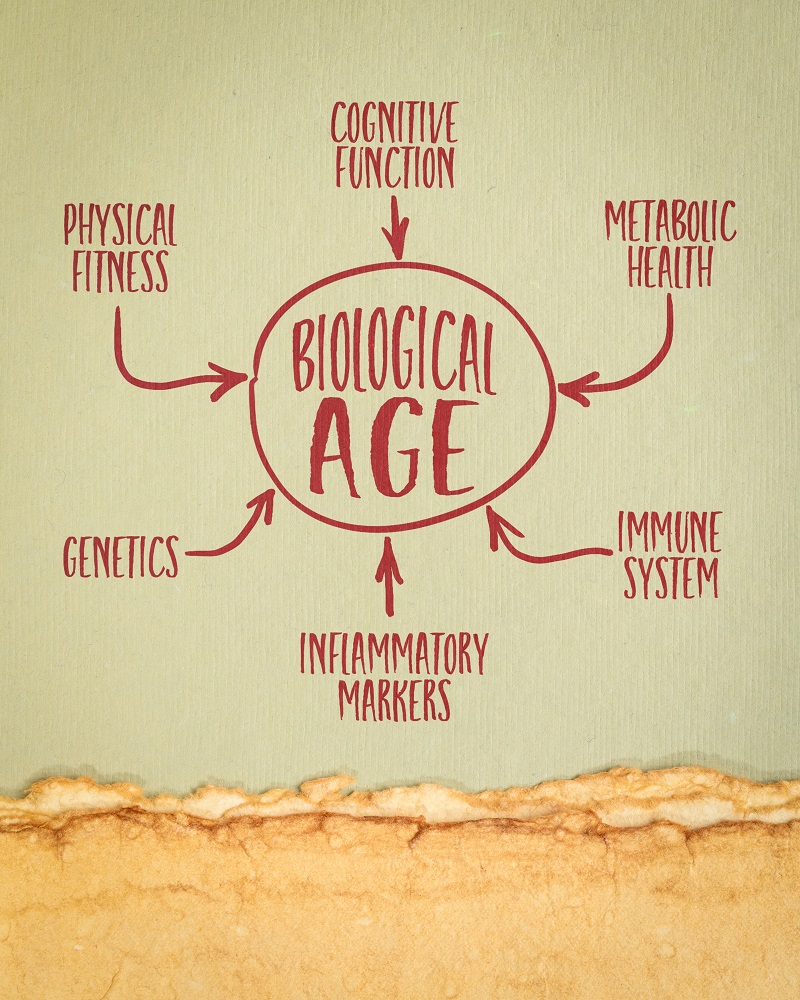
With every passing year (and every passing day), you get older and age. These two things are unavoidable. And while everyone gets older at the same rate, not everyone ages at the same rate. In this case, age refers to physical and mental decline. This is commonly referred to as biological age. But what is biological age?
What is biological age?
You probably know people who are of similar age in years (chronological age) but one may seem younger than the other. This younger seeming person may have less wrinkles, move and hold themselves differently, have less body fat and be in better shape. Without doing any measurements, you might be able to guess who is healthier and may live longer. This could be because the younger looking person likely has a lower biological age.
Biological age is a fairly recent term. And it doesn’t always equal one’s chronological age. Biological age is commonly defined as how your cells, tissues and organs age. Over time, your cells and organs breakdown and work less efficiently. Your DNA accumulates errors. Outwardly, these changes may be seen as wrinkles and changes in skin tone. But these DNA changes can also increase your chances of getting diseases such as cancer, heart disease and dementia.
There are lots of attempts to measure biological age, but not one single method. The most common method is through DNA testing, in which your DNA is assessed for the amount of tags it has (methylation attachments to your DNA). There are also blood tests measuring things such as cholesterol, insulin and inflammatory markers. These biological age tests are often run by for-profit companies. You might also see biological age on body fat scales and wearables. But given the various different ways in which biological age is determined, it’s unlikely any two measures will give you the same answer.

Is it a health marker?
The premise of biological age is that the lower it is, the healthier you are and the longer you’ll live. What started out as a method for researchers to study longevity has boomed into an industry of companies and influencers selling tests, supplements and health programs with the promise of fighting age.
But whether or not biological age is a key health factor is unknown. However, many of the measures that go into calculating it are related to health. For example, the methylation attachments on DNA, referred to as epigenetic changes, are related to ageing. Older people tend to have more of these attachments. In addition, other health measures used in calculation of biological age include blood factors related to health and disease.

What can you do to reduce your biological age?
A quick Google search and you’ll see companies and influencers selling products and programs to reduce your biological age. These often work under the name of longevity medicine or specialists. There are even longevity clinics which will put you through a series of tests and scans to assess your health and then give you a lifestyle program. All at a cost, of course (and an expensive one at that).
But the keys, and knowledge, to reducing your biological age are free. Longevity experts will tell you about regular activity and exercise, healthy nutrition, how to sleep well and not smoking or drinking alcohol. These are all scientifically proven ways to slow down ageing and increase lifespan.
Regular exercise has been shown to reduce ageing of you DNA in numerous studies. Even exercising as little as three months can lead to changes in how your DNA can be used. Diets that emphasize fruit and vegetables, high fibre and lean meats have been shown to reduce the accumulation of epigenetic tags. And in so doing, is one way this type of diet may lead to a longer life. Sleep disorders, smoking and alcohol are also associated with DNA changes that are age-related.
So, while biological age may not be a common health measure, the recognized components of health living are key factors in determining your biological age, and slowing ageing.
If you like this post, don’t forget to subscribe to my blog at the bottom of the page.
Enjoy listening to podcasts? Check out my show How to Health. A podcast about you and your health.
Leave a Reply