


Chronic diseases are diseases that last for several months, require ongoing treatment and have the potential to limit daily activity. This includes diseases such as cancer, diabetes, arthritis, depression, asthma, Alzheimer’s disease and kidney disease. Many chronic diseases have no cure and persist throughout one’s life. For example, while heart disease, such as atherosclerosis, can be treated through lifestyle changes, medications and surgeries, the disease often remains present.
Most of us will likely be diagnosed with a chronic disease as we get older. It’s estimated that from one-third to nearly one-half of adults have at least one chronic disease. And the likelihood of having a chronic disease increases as you age. Perhaps surprisingly, there are more adults with two or more chronic diseases than there are with one.

Many Chronic Diseases are Interconnected
We tend to think of chronic diseases as individual conditions that have no relation to one another. If a person has diabetes and later diagnosed with cancer, most of us think of this as bad luck as opposed to the diseases being related to one another in some way. But we now know different chronic diseases are more connected than we first thought.
This notion that diseases are independent of each other is firmly rooted in our healthcare systems. It’s easy to see when you’re at a hospital. Hospitals are commonly sectioned off by organs. On one floor, or area, you have the cardiac (heart) ward, another floor is for people with lung disease, yet another section for people with kidney disease, and so on.
We even train our healthcare professionals like this. We have cardiologists for the heart, endocrinologists for diabetes, oncologists for cancer, etc. as if our organs and bodily systems act as separate units. This could not be further from the truth. As humans, we’re not a collection of organs that act independently of one another, we’re an integrated biological machine. You can’t affect one part of the body without affecting other parts.
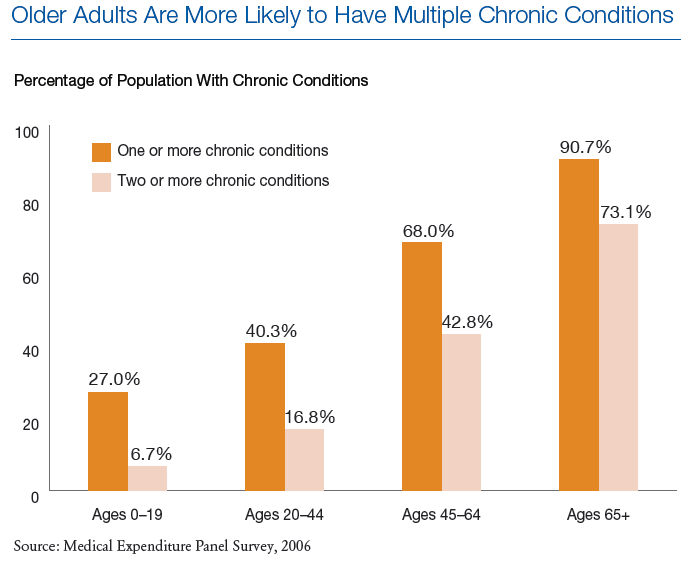
How are chronic diseases related?
There are several reasons why more adults have two or more chronic diseases than just one. One is that our treatment of chronic diseases like cancer and heart disease is much better than in the past. There are far more people living with a cancer diagnosis than ever before, and when people live longer, there is opportunity (for a lack of a better word) to get another chronic disease.
Another reason is that treatment for one disease may increase the risk for another. Radiation therapy for breast cancer may increase risk for heart disease due to the heart being in the area where the radiation is targeted. Drugs used to treat HIV can lead to abnormalities in blood cholesterol increasing risk for heart disease. In these cases, one has to weigh the risks and benefits of the treatment, but usually the treatments outweigh the added risk.
And lastly, for many chronic diseases there are common biological processes. For example, most often people with diabetes die of heart disease because the extra sugar circulating in the blood damages the blood vessels. Diabetes is also a risk factor for kidney disease and some cancers. Likewise, if a person has atherosclerosis in one or more of the arteries in their heart, it is likely that there are other arteries in the body with atherosclerosis. Atherosclerosis in the kidneys can lead to kidney failure, while atherosclerosis in the carotid (neck) arteries is a risk factor for stroke. Given this, the ideal treatment of one disease should take into account all possible outcomes and not just focus on a singular organ or system.

You Can Prevent (and Treat) Multiple Chronic Diseases at Once
The good news is that efforts to prevent one disease are generally effective at preventing multiple diseases. Some of this has to do with multiple diseases having similar biological processes, but it mainly has to do with the many benefits of prevention. And what I mean here, is the benefits of healthy lifestyle behaviours.
When someone smokes, it increases the risk for a number of cancers, heart disease, stroke and lung disease. That’s why quitting smoking is the best thing a smoker can do for their health. Likewise, healthy eating is effective at preventing a wide range of conditions, heart disease, diabetes, stomach/gut disturbances, some cancers, obesity as well as other conditions. We also know that regular activity can help prevent those and other diseases.
It’s not just prevention that healthy living is good for, it is also for treatment. The use of exercise and nutrition has been used for decades to treat people with diabetes and heart disease. Exercise is also a recommended treatment for osteoarthritis, chronic fatigue (although the amount of activity needs to be carefully planned) and back pain. The Clinical Oncology Society of Australia published a statement on the use of exercise to treat patients with cancer.
Of course, the treatment of many chronic diseases will include the use of medications, however, pills should never be thought of as a treatment for an unhealthy lifestyle. People who have improved their lifestyle behaviours can actually have their medications for hypertension, cholesterol and blood glucose reduced, or even stopped.
If you like this post, don’t forget to subscribe to my blog at the bottom of the page.
Enjoy listening to podcasts? Check out my show How to Health. A podcast about you and your health.

Leave a Reply