


In the 80s and 90s, people were told they weren’t getting enough exercise unless they sweat it out in a gym or on the pavement. This impression still lingers today in fitness centres and on social media, and with some personal trainers. If you are doing this type of activity, great! But we now know it may not be essential. Over the past few years, we’ve learned more about what counts as exercise. And how non-traditional activity may also have health benefits.
Exercise is defined as a planned and structured session of physical activity carried out to improve or maintain one or more aspects of fitness or health. It can also be done for the enjoyment it provides. Exercise is done almost always during one’s leisure time. Physical activity, on the other hand, is basically any movement you make. It can be exercise or it can be activities done at work, in the house or at school. From getting up from your chair to gardening, both are forms of activity.

How much exercise is needed?
Inherent in the definition of exercise is the notion of some sort of intensity. Exercise is generally done at an intensity you wouldn’t normally do throughout the day. For example, most people won’t consider walking to the grocery store as exercise. A higher intensity results in a challenge, or stress, to your body that leads in increases in health and fitness. Essentially, you’re overloading your body for a short period of time.
Physical activity guidelines have evolved from the ones of decades old as the science in the field grows. These guidelines recommend getting at least 150 minutes of moderate activity, or 75 minutes of vigorous activity, per week, and working towards double that. Plus, two sessions per week dedicated to strength training. For most people, moderate activity is a brisk walk, while vigorous activity would be something like running, playing tennis or swimming.
As you can see, there’s a trade-off between how much you do, and how intense you do it. The more intense the activity, the lower the minimal recommended time. And there’s science behind this. A small study found three weekly sessions of short bursts of all-out intense exercise over ten minutes resulted in similar improvements in blood glucose metabolism and fitness compared to 50 minute session of moderate activity.
But you don’t need to do these activities all at once. It’s the total amount throughout the day that matters. Of course, you’re probably not going to go to the gym for less than 10 minutes or play a nine-minute game of tennis. But you can accumulate your exercise through exercise snacks– short bursts of activity from 1-3 minutes at a time. This can be climbing stairs, doing squats by your desk, jumping jacks or anything that gets your heart and breathing rate up.

Is any activity good activity?
Many activity guidelines recommend moving more and imply that any movement is good activity. And for the most part, that’s true. My research has shown that activities done as a part of work, commuting by foot or bike, and even doing household chores can have substantial health benefits. In fact, the people who got the most activity were those who were active throughout the day and not just being during their leisure time.
This pattern of activity is predominant in the Tsimane in Bolivia, a pre-industrial hunter-gatherer population. The Tsimane spend most of their day active, with less than 10% of the daytime sitting. However, none of their activity would be considered exercise as we know it. They’re also believed to have the lowest rates of atherosclerosis in the world. And while other factors, such as not smoking and diet are likely involved, much of the health benefits are believed to be the result of their high activity levels.
But there may be times and conditions in which activity shouldn’t be done. Or more caution taken when being active. For example, exercising in extreme heat or during periods of high pollution. In these cases, avoiding outdoor activity is recommended. In addition, we’re now realizing that people in jobs that comprise of heavy manual labour, may not be ideal either. Some research indicates this may increase one’s chances for heart disease and early death. One reason may be the constant repetitive movements with limited breaks such as in construction, roadwork and landscaping jobs.
What counts as exercise?
Like the Tsimane, many activities we come across in our daily lives are actually equivalent in time and effort to traditional exercise. For example, shovelling the snow is not much different than running on a treadmill, mowing the lawn is like going for a brisk walk or moderate jog, and climbing stairs at a moderate pace is similar to swimming.
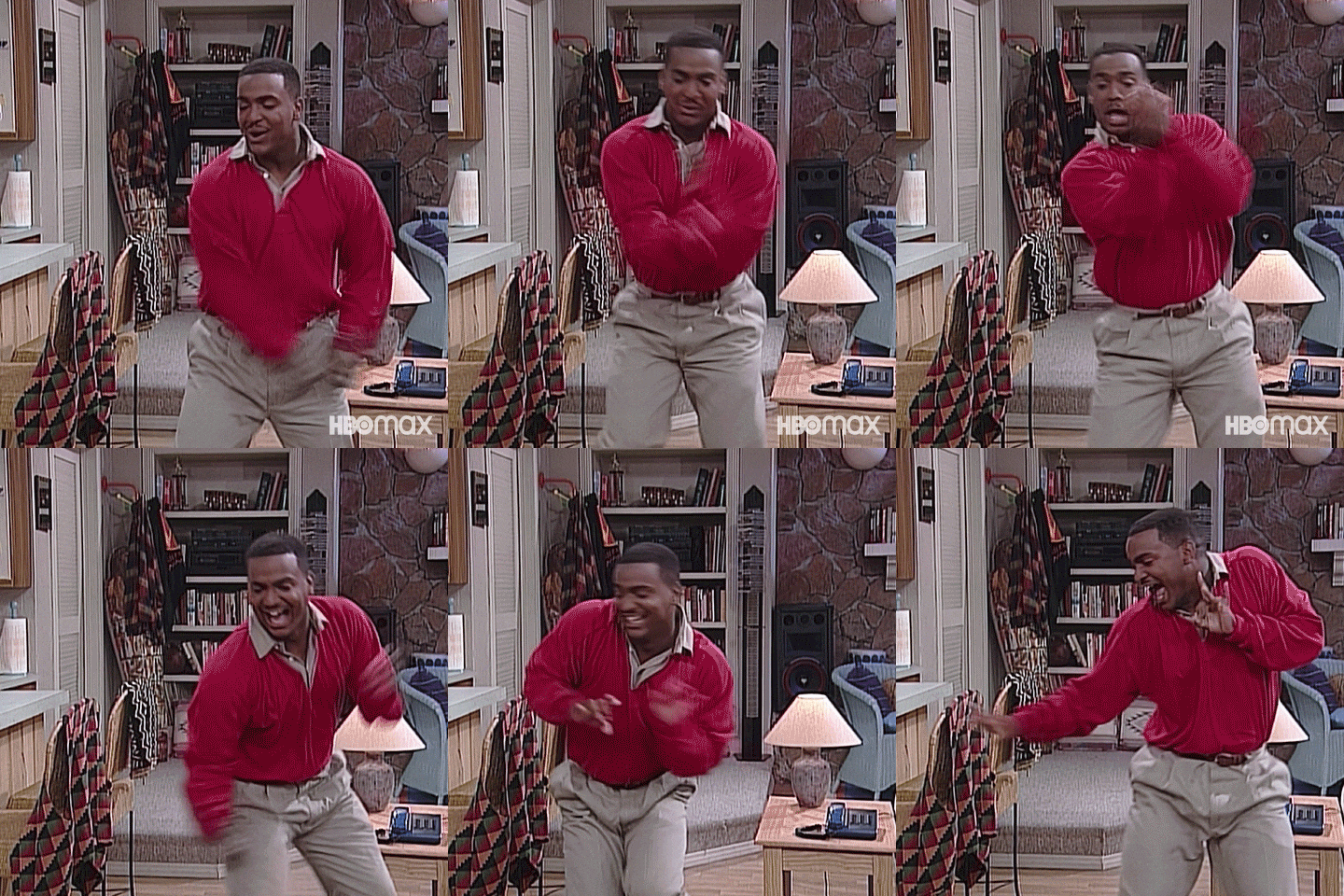
Dancing is another great activity. We conducted a study in women comparing Bhangra dance (a dance comprising of kicking and arm movements originating in India) to gym-based exercise on treadmills and stationary bicycles. While women in both groups improved their fitness after 12 weeks, fitness in the dance group went up even higher.
So, whether you go to the gym, are active at work or home, or actively commuting, it can all be beneficial. In fact, your body doesn’t care what type of activity you do and what you call it, it only cares that you do it. With all these choices available, there’s bound to be one, or two, or more, types of activity for you that count as exercise. And remember, the best type of exercise is the one you enjoy and will keep doing.
If you like this post, don’t forget to subscribe to my blog at the bottom of the page.
This post was originally published on Feb 5, 2020 and updated on Oct 1, 2025.
Enjoy listening to podcasts? Check out my show How to Health. A podcast about you and your health.


Leave a Reply