

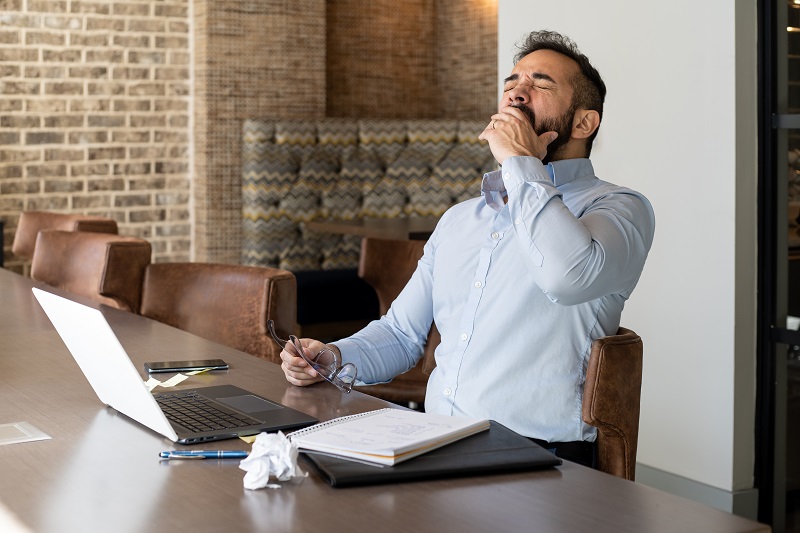
Ever get to the middle of the afternoon and felt sluggish? You’ve been on the go all morning and had lunch and now you find it hard to think. You feel drowsy but you keep on going. If this happens to you, you’re not alone. A lot of us face fatigue in the middle of the afternoon leading to an afternoon slump. But are you really tired or is something else happening?

What is the afternoon slump?
Some call it a food coma, others the afternoon slump. Regardless of what it is, when it hits you, you feel like you can’t focus and want to drop your head down, whether on your desk or lean back in your chair. But often people try to fight it and carry on. Or chug back some coffee for the caffeine boost.
Because it happens soon after lunch, many people believe the fatigue in the afternoon is due to your blood travelling to your gut for digestion. And there’s some truth to it. Eating a heavy meal can make you sluggish as blood is directed away from other parts of your body to your gut. In addition, hormones are released to aid in digestion. But not every time someone feels sluggish in the afternoon, does it follow a heavy lunch.
There are also certain biological processes that can lead to a sluggish feeling later in the day. As your brain is working, it uses up energy, which leads to accumulation of adenosine. Adenosine can block areas of the brain involved in being alert. In addition, it’s believed the neurotransmitter, glutamate, accumulates because of continual thinking. It’s possible that higher levels of glutamate in the brain may be associated with less cognitive thinking. These changes can result in you feeling tired.

Should I power through or take a nap?
It’s common to try to power through the afternoon slump but that might not be the answer. As you continue to work, your performance goes down. It’s like trying to continually lift a weight even though you’re tired.
One thing that might cross your mind is to take a nap. Although this only works if you work from home or have a private office. A nap is okay if you limit it to 20-30 minutes (set your phone alarm so you don’t oversleep). A nap of this time can make you feel refreshed and improve cognitive function for a short time afterwards. But much longer and you could be impacting your ability to get to sleep later at night.
Reaching for another coffee may not be the answer either. If you’re a regular coffee drinker, you might not get the boost you think you do. Also, for many people, an afternoon coffee can affect sleep later, which will make them tired the next day, likely leading to another afternoon slump.
A sure-fire way to beat the afternoon slump is to get some activity. This doesn’t have to be long. As little as ten minutes can give you a boost of energy, improve your mood and enhance productivity. If you can do it outside, even better. Natural light (or any bright light) supresses melatonin (the sleep hormone).

How to Prevent the Afternoon Slump
There are a number of ways you can prevent or pre-empt the afternoon slump. A key factor is getting good quality sleep each night (tips for sleep here). The more sleep deprived you are, the more sleep debt you create, which is a factor in how you feel later in the day.
Another is taking a break and/or getting in some physical activity or exercise before you would usually get an afternoon slump. A ten-minute walk is just as good as a cup of coffee. And it can also give a boost to your memory, creativity and productivity.
At lunchtime, avoid foods and drinks high in sugar. Meals high in sugar may give you an immediate boost, but it’s short lived as insulin is released to remove the extra sugar. This can result in insulin clearing too much sugar, leaving you feeling tired later on. And when on lunch (or other breaks), put your phone down. The value of a break is to give your brain a rest. When you keep it stimulated by scrolling through your phone, it doesn’t get the rest it needs.
If you like this post, don’t forget to subscribe to my blog at the bottom of the page.
Enjoy listening to podcasts? Check out my show How to Health. A podcast about you and your health.


Leave a Reply