


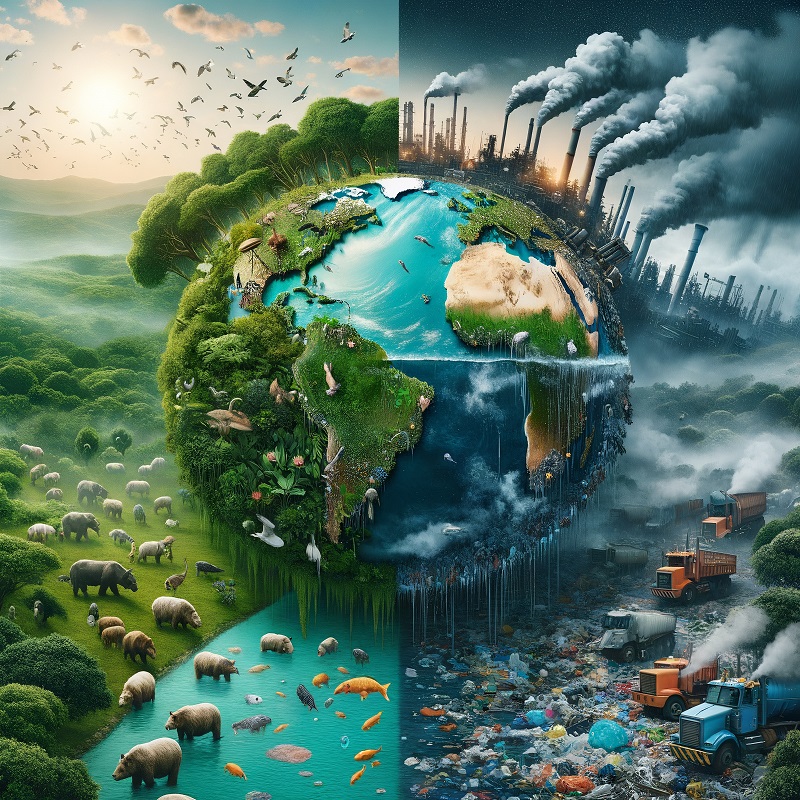


Pollution can have a number of effects on your health. While air pollution is probably what comes to mind for most people, there’s also noise and plastics pollution (read about microplastics and your health here). Most would agree pollution is bad for us. Yet it’s a common belief that there’s nothing we can do about it. But that’s not true. There are a number of things you can do to reduce your exposure to pollution and protect your health.


Air Pollution
Air pollution comes from cars (exhaust and dust from brake pads and tires), industry and forest fires. The latter being something of increasing concern with each year. Air pollution is usually described as particulate matter. Particulate matter is microscopic particles, either solid or liquid, that are in the air. It’s not a specific type of pollution and can comprise of ozone, nitrogen dioxide, sulfur dioxide and carbon monoxide
Particulate matter is categorized by size. The two most common categories are PM10 (<10 um in diameter, a human hair is about 50-70 um in diameter) and PM2.5 (<2.5 um in diameter). PM10 can be dust, pollen and mold, while PM2.5 can be combustion particles, chemicals and metal. While air pollution is stabilizing or decreasing in developed countries, it’s increasing in many parts of the world. And based on the World Health Organization’s guidelines for recommended air quality, 99% the world breathe air that exceeds these limits.
Because of the small size of PM2.5 particles, they’re readily inhaled and can enter your bloodstream. Air pollution is associated with an increased chance of diseases such as lung disease, heart disease and cancer (for example, lung and breast cancers). It can also aggravate pre-existing conditions such as asthma. And its effects on death can be within hours to days, or occur over the long-term. If the air quality is poor, some people also experience coughing, eye irritation, wheezing and sore throat.

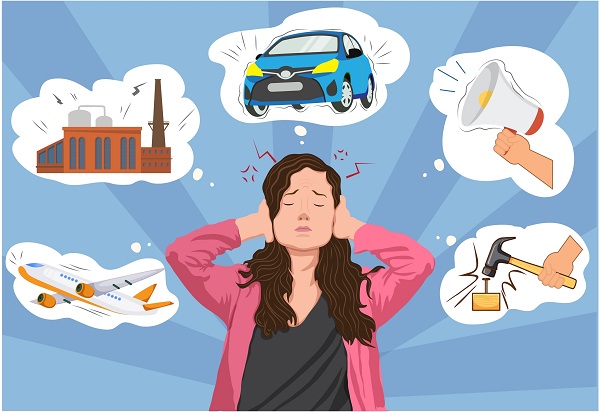
Noise Pollution
Noise pollution, often thought of a mere annoyance, can also affect your health. It tends to be more localized than air pollution. It doesn’t travel for hundreds of miles like pollution from industry and fires can. For example, a gas-powered leaf blower is 65-80 decibels at 50 feet but over 95 dB up close. The most predominant source of noise pollution is from traffic, other sources include construction, machinery, aircraft and landscaping equipment.
Studies have linked noise pollution with heart disease. One study reported that increased neighbourhood noise was associated with a small, but measurable increased chance for having heart disease. It’s also been suggested that 1 in 20, or 5%, of heart attacks may be due to noise.
Continued exposure to high noise levels (>65 dB) has been associated with higher blood pressure and other risk factors for heart disease. It can also lead to increased activity in the area of the brain associated with stress, anxiety and fear. Sleep disturbances are also more common in higher noise environments. Together, these factors can increase your chances of getting heart and other diseases.


Ways to Reduce Your Exposure and Help Your Health
Regardless of where you live, you’ll be exposed to either air or noise pollution at some point. And in both cases, there are things you can do for your health. For both types of pollution, the further away you are from it, the less of a concern. For example, people who live close to a major road or highway may be more likely to get dementia than those living further away. But not all roads are the same. Roads on which more diesel trucks travel result in more pollution than roads filled with cars.
If you live near a busy road, you can reduce your exposure to air and noise pollution by avoiding being outside during high traffic times. When walking, running or cycling outside, choose residential routes with less traffic. Planting trees and bushes can reduce pollution from reaching your house. Indoor filters also protect against outdoor pollution. The use of indoor air filters during pregnancy led to better health of babies.
Avoid using gas-powered equipment as much as possible. Landscaping equipment is especially problematic as it uses a two-stroke engine. A gas-powered leaf blower puts out more pollution than a pick-up truck. And this doesn’t include the pollutants and dust the blower churns into the air. If you must use such equipment, wear appropriate protection for your ears, eyes, nose and mouth to minimize your exposure.
If you like this post, don’t forget to subscribe to my blog at the bottom of the page.
Enjoy listening to podcasts? Check out my show How to Health. A podcast about you and your health.